 blog
blog
Islamic Books for Kids Online: A Parent's 2026 Guide
Table of Contents
- Why Islamic Books for Kids Online Matter More Than Ever
- Quick Comparison: Types of Islamic Children's Books
- How to Teach Children About Islam Through Books
- Best Islamic Books for Kids by Age Group
- Islamic Children's Stories Online: What to Look For
- Activity Books, Workbooks, and Ramadan Journals
- Neurodivergent-Friendly Islamic Resources
- Building a Home Library: Practical Tips
- Frequently Asked Questions
Last Updated: September 13, 2026
Why Islamic Books for Kids Online Matter More Than Ever
Building a Muslim child's identity in 2026 means competing with screens, algorithms, and a culture that rarely reflects their faith back at them. Islamic books for kids online give parents a way to push back, one story at a time.
At Rumi Bookstore & Gifts, we have watched this shift up close. We have served Muslim families through our Fremont showroom since 1999 and worldwide through our website for many years, and the questions parents ask have changed. They no longer want a random stack of books. They want a deliberate library that shapes belief, character, and belonging.
The stakes are real. Children who grow up without stories that mirror their faith often treat Islam as a set of rules rather than a lived identity (apa.org). Books close that gap. They turn abstract teachings into characters a child can love, and into lessons a child can carry to school the next day.
Below, we break down the types of Islamic children's literature available, how to match books to your child's age and temperament, and how to build a home library that actually gets read.
Quick Comparison: Types of Islamic Children's Books
Not every Islamic children's book does the same job. Some build vocabulary, some build character, and some build knowledge of the Prophetic traditions. Matching the format to the goal saves you money and shelf space.
| Book Type | Best For | Typical Age Range | What It Builds |
|---|---|---|---|
| Board books | First words and familiarity | 0-4 | Vocabulary, comfort with Islamic terms |
| Storybooks | Prophets and Sahabah narratives | 4-8 | Emotional connection to Islamic history |
| Chapter books | Independent reading | 8-12 | Reading stamina, deeper moral reflection |
| Activity books | Hands-on learners | 4-10 | Retention through doing |
| Qur'an primers | Letter and recitation basics | 5-10 | Foundational literacy |
| Ramadan journals | Seasonal reflection | 6-12 | Habit-building and self-awareness |
Most families need three or four of these categories, not all six at once. Start with the format that matches your child's current stage, then expand.
How to Teach Children About Islam Through Books
Teaching children about Islam through books works best when reading becomes a routine rather than an event. A child who hears a Prophetic story every night internalizes it differently than one who hears it once at a weekend class (aap.org).
Reading Rituals That Build Faith
Pick a fixed time. Bedtime works for most families because it is already a calm, predictable moment. Keep a small basket of three or four books near the reading spot so your child chooses the story. That small act of choice makes the book feel like theirs.
Ask one question after each story. "What would you have done?" works for almost any narrative. It turns reading into conversation, and conversation is where belief becomes personal.
Talking About Complex Ideas Without Overwhelm
Children ask hard questions. Why did that happen? Why do we do this? You do not need a theology degree to answer well.
A common mistake is answering more than the child asked. A five-year-old asking about prayer wants to know that it happens and that it matters, not the full legal reasoning behind it. Give the short, true answer, then let the child lead.
For older children, pair the story with the practice. Read about the Prophet's patience, then point out a moment of patience in your own day. Abstract concepts become concrete when they attach to something the child already saw.
Best Islamic Books for Kids by Age Group
Age is a useful filter, but it is not the only one. A precocious seven-year-old may be ready for chapter books, while a reluctant nine-year-old may still prefer illustrated stories. Use these ranges as a starting point, then adjust to your child.
Most buying guides stop at age. A more useful filter is developmental stage, what your child is cognitively and emotionally ready to do with a story. The two usually line up, but when they don't, trust the developmental stage. A book that matches how your child thinks will get read; a book that only matches their birthday will sit on the shelf.
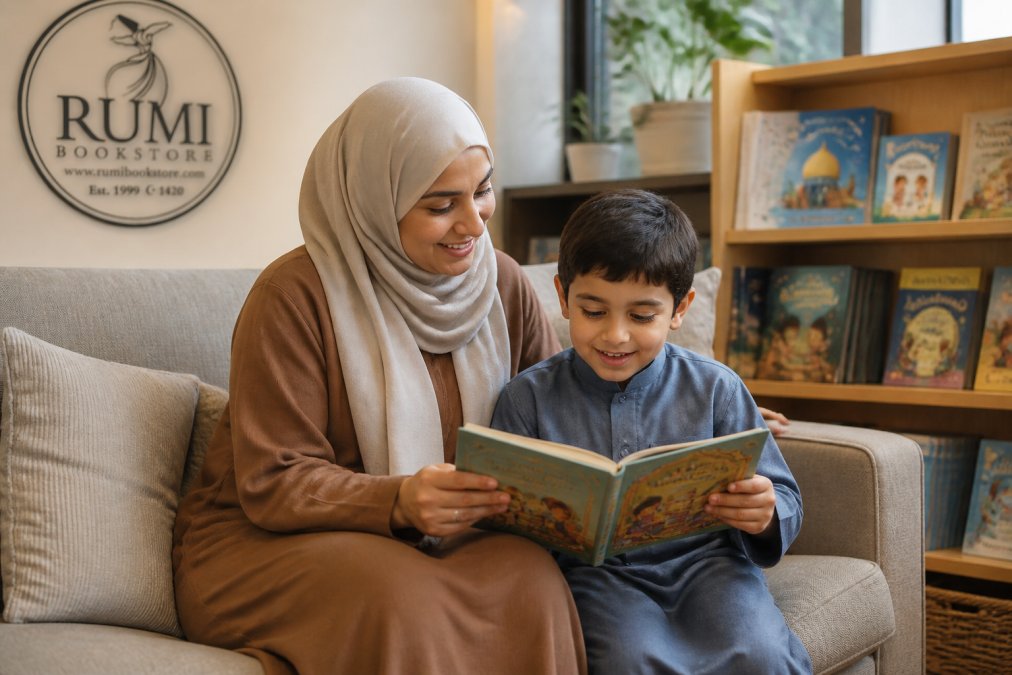
Ages 0-4: Board Books and First Words
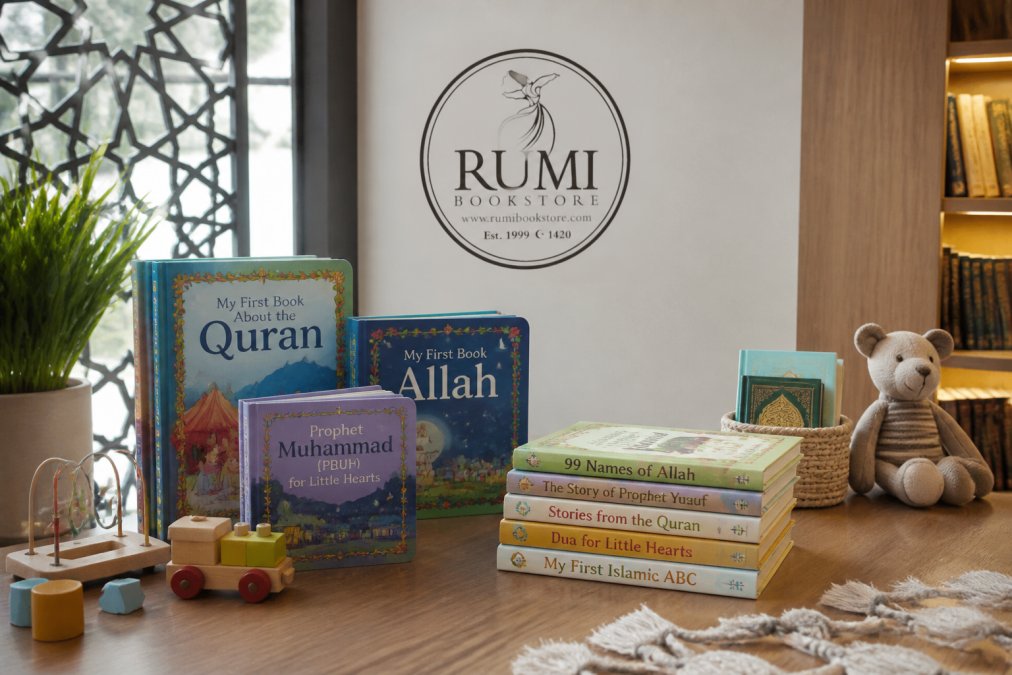
Board books are the entry point. Look for thick pages, simple illustrations, and one concept per page. Books that introduce words like bismillah, alhamdulillah, and salaam give toddlers a vocabulary they will use before they can read.
At this stage the developmental goal is security and familiarity, your child associates Islamic words and images with comfort, not instruction. Avoid books with long text blocks. The goal is familiarity, not comprehension.
Ages 5-8: Stories of the Prophets and Sahabah
This is the golden age for Islamic storytelling. Children at this stage love narrative, and they are building their sense of right and wrong. Stories of the Prophets and stories of the Sahabah do both jobs at once.
The developmental goal here is empathy and moral imagination, your child practices feeling what a character feels. Look for clear language, vivid illustrations, and a single lesson per story. If a book tries to cover twenty stories in forty pages, it will blur together.
Ages 9-12: Chapter Books and Qur'an Primers
Older children want to feel capable. Chapter books give them that feeling, and Qur'an primers give them a skill they can measure. This is also the age when Islamic identity becomes social, so books about Muslim youth navigating school, friendship, and faith carry extra weight.
The developmental goal shifts to critical thinking and identity, your child starts asking why and comparing what they read to what they see. Choose books that invite questions rather than shut them down.
A Developmental Reading Path (Beyond Age Bands)
If you want to build a library that grows with your child rather than just filling a shelf, sequence the books around three milestones:
- Security (roughly 0-4): predictable formats, one idea per page, words and images tied to comfort and routine.
- Empathy (roughly 5-8): single-protagonist stories with a clear emotional arc, so your child practices perspective-taking.
- Identity and reasoning (roughly 9-12): chapter books and primers that raise real questions about belief, community, and choices.
A common pattern is to buy ahead of the milestone and then wonder why the book goes unread. Match the milestone first, then let interest and reading level fine-tune the pick. When in doubt, choose the book one step behind your child's age, a slightly easy book that gets finished builds more momentum than a challenging one that gets abandoned.
Islamic Children's Stories Online: What to Look For
Shopping for Islamic children's stories online comes down to three checks: authenticity, age fit, and production quality. Skip any one of these and the book ends up unread.
Authenticity means the content aligns with the Qur'an and Sunnah and reflects mainstream scholarship rather than a single author's personal interpretation. Age fit means the language and themes match your child's current stage. Production quality means the binding holds, the pages are thick enough for small hands, and the illustrations are worth looking at twice.
That is the baseline every seller will claim. The harder question is how to verify it before you buy, and how to use the book once it arrives.
How to Vet a Listing Before You Buy
- Read the sample pages, not just the cover. Most reputable sellers, including Rumi Bookstore & Gifts, let you preview the interior. If a listing shows only the cover, treat that as a warning sign.
- Check who reviewed or endorsed the text. A named scholar, an established publisher, or a recognized educational reviewer carries more weight than an anonymous five-star rating.
- Look at the text-to-image ratio. For younger readers, more image and less text usually means better retention. For older readers, the reverse.
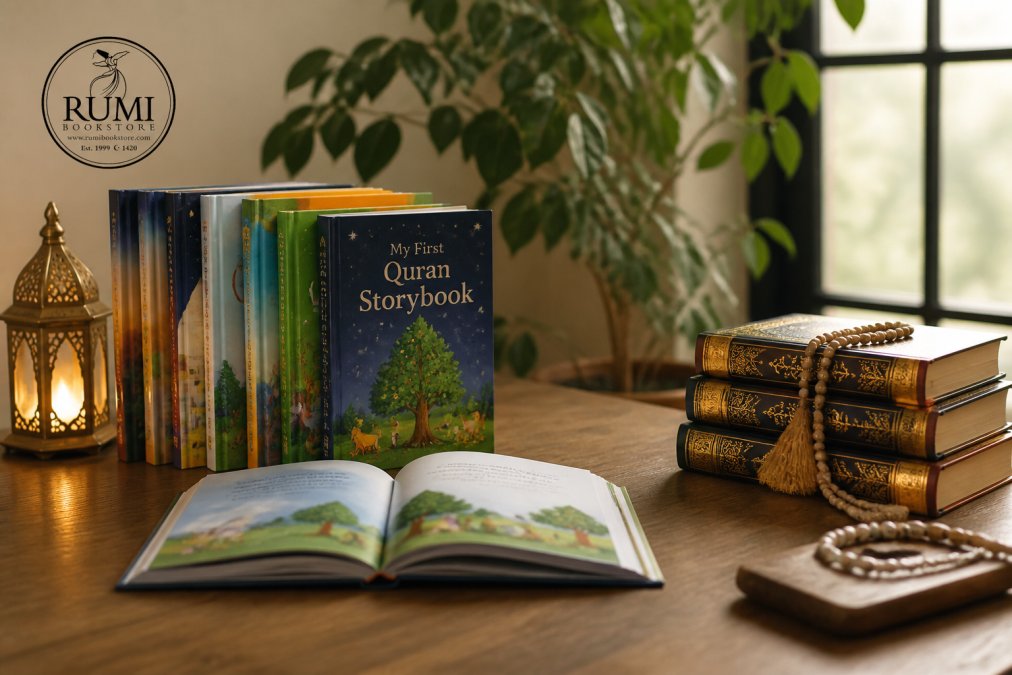
- Confirm the series, not just the title. A predictable series with a consistent layout is easier for a child to return to than a one-off book with a different design.
- Read the return policy. Online buying means you cannot flip through the physical book first, so a clear return or exchange policy matters more here than in a store.
Using the Book to Talk About Hard Questions
A book is a conversation starter, not a substitute for one. Parents often freeze when a child asks something theologically heavy, about death, about why bad things happen, about why we pray. You do not need a theology degree to answer well.
A workable approach:
- Answer only what was asked. A five-year-old asking about prayer wants to know that it happens and that it matters, not the full legal reasoning behind it.
- Anchor the answer in the story you just read. "Remember how the Prophet was patient? That is the same patience we are talking about."
- Let the child lead the next question. If they stop, the conversation is done for now. If they keep asking, follow them.
- Revisit later. A question answered once at age six lands differently when it comes back at age nine.
A practical shortcut for the whole process: buy one book at a time from a source that knows the material, read it together, and let your child's reaction tell you what to buy next. Rumi Bookstore & Gifts has served Muslim families for 27 years, and our team reads what we stock.
Activity Books, Workbooks, and Ramadan Journals
Activity books turn passive reading into active learning. Mazes, coloring pages, matching games, and tracing exercises hold attention longer than text alone, especially for children who learn by doing.
Ramadan journals deserve their own mention. A good journal gives a child a daily prompt, a small space to write or draw, and a tracker for prayers or good deeds. Over thirty days, that small habit becomes a memory the child associates with the month itself.
For families with multiple children, buy one journal per child. Shared journals rarely get used consistently.
Neurodivergent-Friendly Islamic Resources
Most Islamic children's book catalogs are not designed with neurodivergent kids in mind, and that is a real gap. Children with ADHD, autism, or sensory processing differences often need shorter text, clearer structure, and predictable formats (the CDC).
What works:
- Books with one idea per page and generous white space
- Predictable series where each book follows the same layout
- Visual schedules and routine-based stories that reduce uncertainty
- Activity books with clear, single-step instructions
What tends to fail:
- Dense paragraphs with small type
- Books that jump between many characters or timelines
- Stories that rely heavily on implied social cues
If your child is neurodivergent, the right book is the one they will actually return to. That often means simpler, shorter, and more repetitive than the standard recommendation for their age.
Building a Home Library: Practical Tips
A home library grows best in stages. Start with five to ten books that match your child's current age and interest, then add as their reading level changes.
Keep the books visible. A low shelf at the child's eye level gets more use than a high shelf behind a door. Rotate the selection every few weeks so older books feel new again.
Read together even after your child can read alone. Shared reading keeps the conversation going, and the conversation is where the values stick.
Finally, buy from a source that knows the material. Islamic children's literature has grown quickly, and not every title on the market reflects careful scholarship. Rumi Bookstore & Gifts has served Muslim families for 27 years, and our team reads what we stock.
Building a library that shapes your child's faith takes time, and it starts with one good book. Rumi Bookstore & Gifts offers a curated selection of children's Islamic books, Qur'an primers, Ramadan journals, and activity workbooks, backed by many years of serving Muslim families from our Fremont showroom and worldwide online. Browse our children's collection, preview the pages, and start with the book that matches where your child is right now. Shop now and build a shelf your kids will actually read.
Frequently Asked Questions
What is the best Islamic book for kids?
The best Islamic book for kids depends on their age and interests. For toddlers, board books with simple words and bright illustrations work well. For ages 5-8, Stories of the Prophets and Sahabah stories capture attention. For older kids, chapter books and Qur'an primers build deeper understanding. Look for books that align with your child's developmental stage and feature authentic sources like the Qur'an and Sunnah.
How can I choose age-appropriate Islamic books for my child?
Match the book's complexity to your child's reading level and attention span. For ages 0-4, choose board books with one or two words per page. Ages 5-8 enjoy picture books with simple narratives about Prophets and moral lessons. Ages 9-12 can handle chapter books and introductory Qur'an primers. Check that illustrations are engaging and that the language avoids overwhelming theological concepts. Reading a few pages yourself first helps confirm the fit.
Are there online resources for Islamic children's literature?
Yes, many online bookstores specialize in Islamic children's literature. Look for retailers that curate titles by age group and topic, offer authentic texts, and provide detailed descriptions. Rumi Bookstore & Gifts, serving the Muslim community since 1999, offers a wide selection of children's Islamic books online. You can also find read-aloud videos and digital storybooks, but physical books remain best for building a home library and shared reading routines.
What are the benefits of reading Islamic stories to children?
Reading Islamic stories to children builds faith-filled connections, teaches moral lessons, and strengthens Islamic identity. Stories of the Prophets and Sahabah introduce young Muslims to Qur'an and Sunnah in an engaging way. Shared reading also creates bonding time and opens conversations about Islamic values. Regular read-aloud sessions help children see Islamic education as enjoyable rather than a chore, supporting long-term spiritual growth and character development.