 how-to
How to Fold a Prayer Mat for Travel: A Step-by-Step Guide
Table of Contents
- Why Folding Your Prayer Mat Correctly Matters for Travel
- What You'll Need Before You Start Folding
- Step-by-Step: How to Fold a Prayer Mat for Travel
- Choosing a Portable Travel Prayer Mat
- How to Prevent Wrinkles and Creases in Your Travel Mat
- Storage Solutions and Carrying Cases for Compact Mats
- Where to Buy Prayer Mats You Can Trust
- Conclusion
- Frequently Asked Questions
Last Updated: October 2, 2026
Why Folding Your Prayer Mat Correctly Matters for Travel
Knowing how to fold a prayer mat for travel keeps your rug clean, flat, and ready for salah wherever you are. A mat that's folded well slips into a bag without bulk. One that's folded badly creases, frays, or takes up half your luggage.
guidance on packing and folding textiles for travel
What You'll Need Before You Start Folding
A clean, flat surface is the only real requirement. A bed, a table, or the floor works fine. Beyond that, a few small items help:
- Your prayer mat, brushed clean and dry
- A carrying case or storage bag
- A clean cloth for spot cleaning
- A rubber band or strap for thicker mats
Step-by-Step: How to Fold a Prayer Mat for Travel
The best fold depends on your mat's thickness. Thick mats roll. Thin mats fold. Match the method to the mat and you'll avoid permanent creases.
The Roll-Up Method for Thick Mats
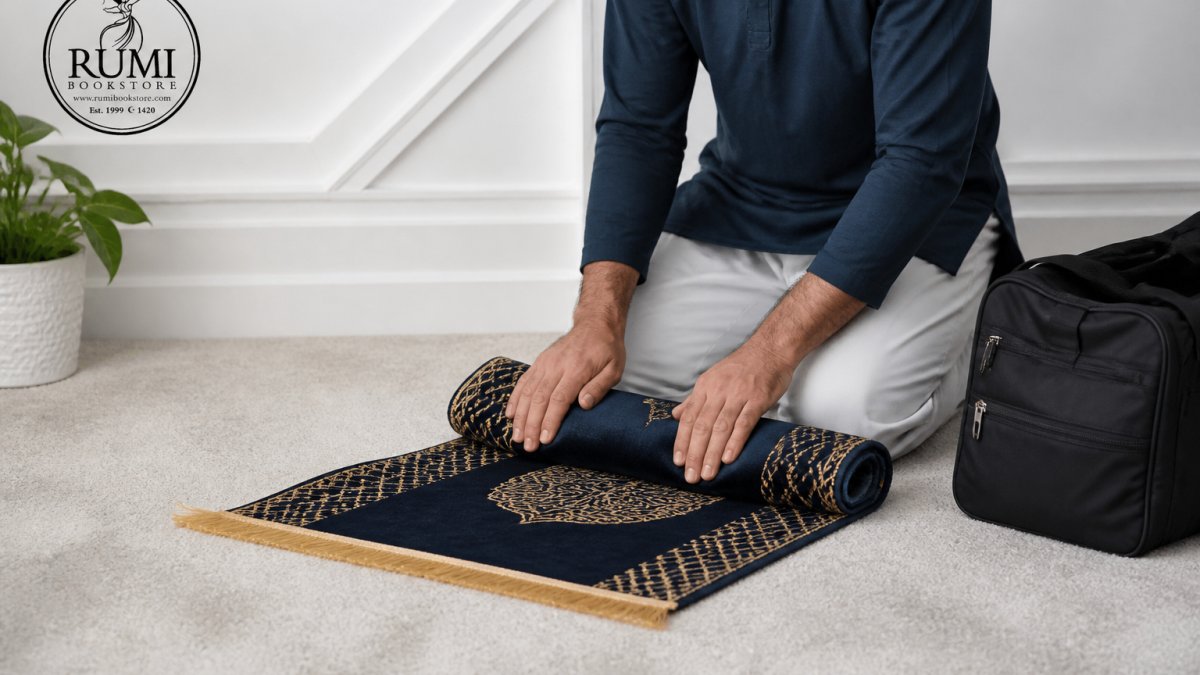
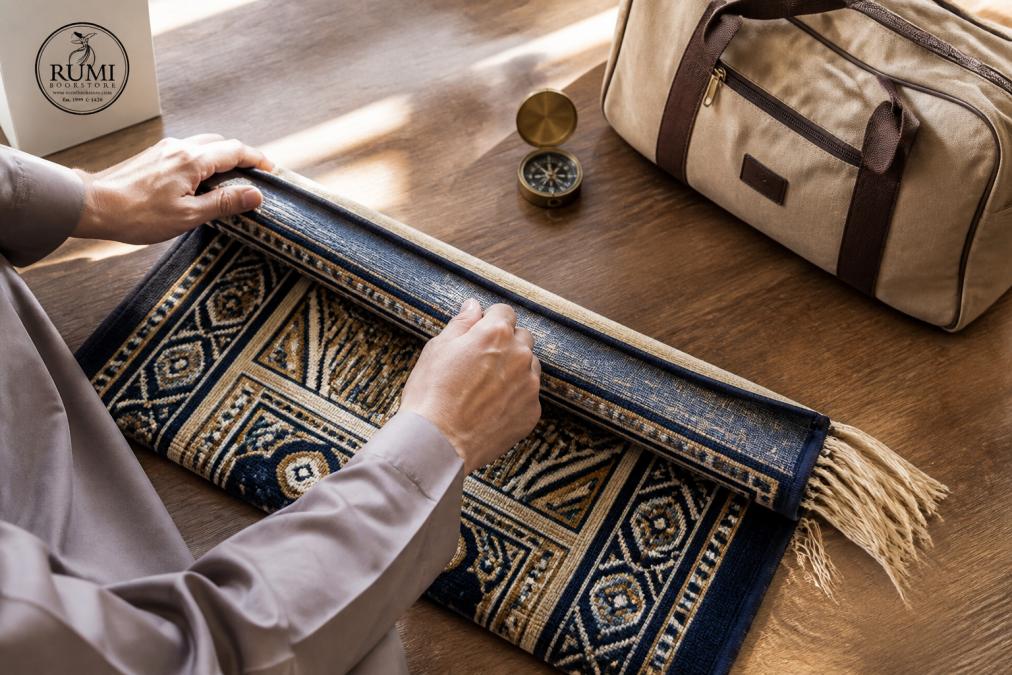
Rolling suits thick, padded mats. These have a plush pile that cracks if you crease it.
- Lay the mat flat with the patterned side facing up.
- Fold it in half lengthwise, pattern inward.
- Starting at the top edge, roll tightly toward you.
- Keep the roll even, pressing as you go.
- Secure the roll with a strap or case.
The Tri-Fold Method for Thin Mats
Thin, lightweight mats fold best in thirds. This method is fast and creates a compact rectangle.
- Place the mat flat, pattern side up.
- Fold the top third down toward the center.
- Fold the bottom third up over it.
- Fold the long rectangle in half once more.
- Press the edges flat and slide it into your bag.
| Method | Best For | Final Shape | Setup Time |
|---|---|---|---|
| Roll-up | Thick, padded mats | Cylinder | About 30 seconds |
| Tri-fold | Thin, lightweight mats | Flat rectangle | About 20 seconds |
Choosing a Portable Travel Prayer Mat
A portable travel prayer mat is a lightweight, compact prayer rug designed to fold or roll into a small size for use away from home. The right one balances size, fabric, and durability.
Look for these features:
- Compact size when folded, ideally pocket-sized or close to it
- Lightweight fabric that won't weigh down your bag
- Crease-resistant weave that springs back after folding
- A non-slip base for outdoor prayer on uneven ground
- A carrying case to keep it clean and separate
Fabric Types and How They Affect Folding
Fabric decides how your mat folds and how well it recovers.
- Cotton blends: Soft and breathable, but wrinkle more easily. Fold loosely.
- Chenille and plush fabrics: Thick and comfortable. Roll these instead of folding.
- Microfiber and synthetic blends: Light, crease-resistant, and quick to dry. Ideal for travel.
- Woven traditional rugs: Durable and beautiful, but heavier. Roll to protect the weave.
How to Prevent Wrinkles and Creases in Your Travel Mat
Wrinkles come from three things: pressure, time, and fold-line repetition. A mat folded tightly along the same line and left in a bag for days will hold that crease long after you unfold it. The fix is not one trick, it is a set of habits matched to your mat's fabric.
Why creases form differently by fabric
- Cotton and cotton blends: Fibers crush and stay crushed. A cotton mat left folded for a week can show a visible line for hours after unfolding. Fold loosely and rotate lines.
- Chenille and plush pile: The pile bends and cracks at sharp folds. Once a plush mat creases hard, the pile may not spring back. Roll these instead of folding.
- Microfiber and synthetic blends: These spring back quickly. They tolerate tighter folds and compression bags better than natural fibers.
- Woven traditional rugs: The warp and weft hold memory. A hard fold can distort the weave permanently. Roll with the pile facing inward.
The fold-line rotation method
Never fold along the same line twice in a row. Shift each fold by roughly an inch from the previous trip's crease. Over four or five trips, you spread the stress across the mat instead of concentrating it on one line. Most travelers who rotate fold lines report that their mat lies flat within minutes of unrolling, instead of hours.
Recovery techniques when a crease has already set
- Hang it: Drape the mat over a shower rod or chair back overnight. Gravity does most of the work.
- Steam, don't iron: Hold the mat over a bathroom sink filled with hot water, or run a garment steamer a few inches above the pile. Never press an iron directly onto the pile, it flattens the fibers and can scorch synthetics.
- Weight-and-rest: Lay the mat flat, pile up, and let it rest under its own weight for a few hours. Avoid stacking books on it; that creates new creases.
- Fresh air: A few minutes outside on a dry day relaxes most natural fibers.
Storing a mat folded in the same spot for months creates a permanent crease line. That line can crack the pile and shorten the mat's life. Rotate your fold lines and let the mat rest flat between trips.
A quick pre-trip checklist
- Unfold the mat fully and let it lie flat for at least an hour before packing.
- Brush off grit, trapped sand acts like sandpaper at every fold.
- Confirm the mat is bone dry. Damp fibers crease harder and hold mildew.
- Choose roll or fold based on pile type, not habit.
- Shift the fold line from last trip's crease.
- Pack the mat on top of soft items, not under shoes or hard gear.
A quick steam over a bathroom sink or a few minutes in fresh air helps a creased mat relax. Never iron directly on the pile.
Storage Solutions and Carrying Cases for Compact Mats
The right case protects your mat and keeps it separate from dirty clothes and shoes. But the case has to match the fold, not just the mat. A rolled mat in a flat sleeve unrolls. A tri-folded mat in a tube case slides around and creases at the corners. Match geometry to geometry.
Case types and what each one actually protects against
- Drawstring pouches: Light and simple. Good for thin microfiber mats on short trips. They do not block moisture or dust well.
- Zippered cases: Keep out dust and light moisture. Best for daily commute mats that live in a bag.
- Tube cases: Shaped for rolled mats. They hold the cylinder shape and protect plush pile from crushing. Look for a tube with a slightly larger diameter than your roll so the mat is not compressed.
- Compression bags: Save real space, but only for crease-resistant fabrics like microfiber and synthetic blends. Never compress cotton, chenille, or woven rugs, you will set permanent creases.
- Flat sleeves: Sized for tri-folded thin mats. A sleeve that is too large lets the mat shift and re-crease; too small and you force the fold tighter than it should go.
Integrated storage features worth looking for
Some travel mats now ship with storage built into the mat itself. These features solve problems that separate cases cannot:
- Attached straps: A strap sewn to the mat edge lets you roll and secure the mat in one motion, with no separate band to lose. This is the fastest deploy-and-pack cycle for daily use.
- Built-in pockets: A small zippered pocket on the mat's underside can hold a compact compass for qibla direction, a small cloth, or a folded prayer card. Everything you need stays with the mat.
- Elastic corner loops: These hold the mat flat on uneven ground and double as a way to bundle the mat when folded.
- Carry handles: A short handle on the case or mat edge makes it easy to pull the mat out of a crowded backpack without unpacking everything else.
Matching case to fold, a quick reference
| Fold method | Best case type | What to avoid |
|---|---|---|
| Roll-up (thick, plush) | Tube case, slightly oversized | Flat sleeves, compression bags |
| Tri-fold (thin, smooth) | Flat sleeve or zippered pouch | Tube cases, oversized bags |
| Quarter-fold (very thin) | Slim zippered pouch | Loose drawstring bags |
Building a compact travel kit
For a travel kit, pair your mat with a small compass for qibla direction and a clean cloth. A compact kit makes outdoor prayer simple, whether you're at a park, a rest stop, or a hotel room. If your mat has a built-in pocket, use it for the compass so the kit stays in one piece.
Match your case to your fold. A rolled mat needs a tube. A tri-folded mat needs a flat sleeve. Mismatched storage undoes a good fold.
Where to Buy Prayer Mats You Can Trust
Authenticity and quality matter when you buy a prayer rug, whether it's for daily salah or a gift. A mat should last for years, not fall apart after a few washes.
When you shop with us, you get:
- A curated selection of prayer rugs for home and travel
- Quality fabrics chosen for durability and comfort
- Authentic products from trusted sources
- A real business with a history you can visit in person
overview of Islamic prayer practices and requirements
Conclusion
Packing for travel gets complicated fast, and a mat that won't fold small only adds stress. Match your method to your fabric, protect the mat in a good case, and it will stay flat and clean for every salah.
Frequently Asked Questions
Is there a specific way to fold a prayer mat for travel?
Yes. The two most common methods are the roll-up and the tri-fold. Roll-up works best for thicker mats because it prevents sharp creases. Tri-fold suits thin, lightweight mats and packs flat. Always fold with the pattern facing inward to protect the design, and smooth the mat flat before folding to avoid trapping dust or wrinkles.
What is the best material for a portable travel prayer mat?
Look for crease-resistant fabrics like microfiber, suede, or a cotton-polyester blend. These materials fold flat, resist wrinkles, and dry quickly if they get damp. A mat with a non-slip backing also helps it stay in place on hotel carpets, airport floors, or outdoor surfaces during hajj or umrah travel.
How do I store a prayer mat to prevent creases?
Roll the mat loosely rather than folding it tightly, or use the tri-fold method and place it flat in your bag instead of cramming it into a corner. A dedicated carrying case or a fabric sleeve keeps the mat compressed evenly. Avoid leaving it folded in the same position for weeks, as prolonged pressure sets creases into the fabric.
Where can I find a portable travel prayer mat?
Rumi Bookstore & Gifts carries a selection of prayer rugs and travel accessories. Since 1999, we have served the Muslim community through our Fremont, California showroom and worldwide through our website. You can browse our collection online or visit us in person to feel the fabric and check the fold before you buy. Rumi Bookstore, A name you can trust.